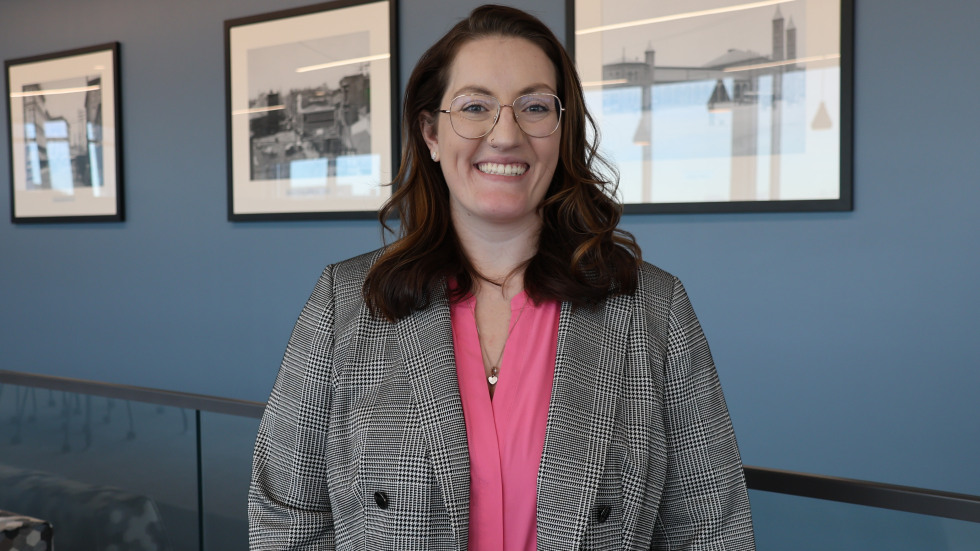
Q: What strengths, skills or qualities do you feel being a first-generation student helped you to develop?
Being a first-generation student taught me resilience, resourcefulness and the importance of advocating for myself. I learned how to ask questions, seek out opportunities and figure things out even when I wasn't entirely sure where to start. It also taught me that asking for help is a strength, not a weakness.
I think it also gave me a deep sense of empathy. I understand that students don't always know what resources are available to them or feel comfortable asking for help. Sometimes, a little encouragement or someone taking the time to explain something can make a tremendous difference.
Those experiences have influenced the way I approach my work and the kind of colleague and leader I strive to be.
Q: Can you describe some of the unique challenges or barriers you faced as a first-generation student? How did you navigate them?
One of the biggest challenges was learning how to navigate higher education without having someone in my immediate family who had experienced it firsthand. There were things I had to figure out on my own, from understanding academic expectations to navigating graduate school and determining what the next step in my education should be.
Sometimes, the hardest part wasn't the coursework itself. It was knowing what questions to ask, what opportunities existed or how to navigate unfamiliar processes.
I navigated those challenges by learning to advocate for myself, asking questions even when I felt unsure and seeking out people who could offer guidance and support. I also learned that I didn't need to have everything figured out all at once.
Earning my MBA and Ed.D. taught me that growth happens one step at a time and that not knowing something doesn't mean you aren't capable of learning it. Looking back, I recognize how much those experiences helped shape my confidence and my approach to challenges.
Q: As a first-generation staff member, how do you draw on your own experiences to support first-generation students at Brown?
I draw on my own experience by trying to remember what it feels like to navigate an unfamiliar process without knowing exactly where to begin. In my work in graduate admissions, I recognize that applying to graduate school can feel intimidating, especially for students who may not have someone in their lives who has gone through the process before.
I try to approach my work with the understanding that what seems straightforward to someone who works in higher education every day may not be obvious to a student experiencing it for the first time. Clear communication, accessible resources and making students feel comfortable asking questions can go a long way toward helping them feel supported.
I also think representation matters. Being able to share my own journey and show students that there are people working in higher education who have faced similar uncertainties can help them see what's possible for themselves. I want students to know that they belong in these spaces, that they deserve access to opportunities and that they don't have to navigate every challenge alone.
Q: What advice would you give to current first-generation graduate students who may be feeling overwhelmed, uncertain about their path or questioning their sense of belonging at Brown?
My biggest piece of advice is to remember that you belong here, even on the days when it doesn't feel that way. You earned your place and you don't need to have everything figured out to deserve to be here. It can be easy to look around and assume everyone else knows what they're doing, but everyone is navigating their own challenges, even when those challenges aren't visible.
Don't be afraid to ask questions, seek out mentors, build relationships and take advantage of the resources available to you. You don't have to navigate graduate school alone and asking for support doesn't diminish your accomplishments.
Most importantly, give yourself credit for how far you've already come. Being the first to do something often means figuring things out as you go, and that takes courage.
Your path doesn't have to look like anyone else's to be meaningful or successful. You bring valuable experiences, perspectives and strengths to your community. Never underestimate the impact of your presence or the doors you're opening for yourself and those who may follow.