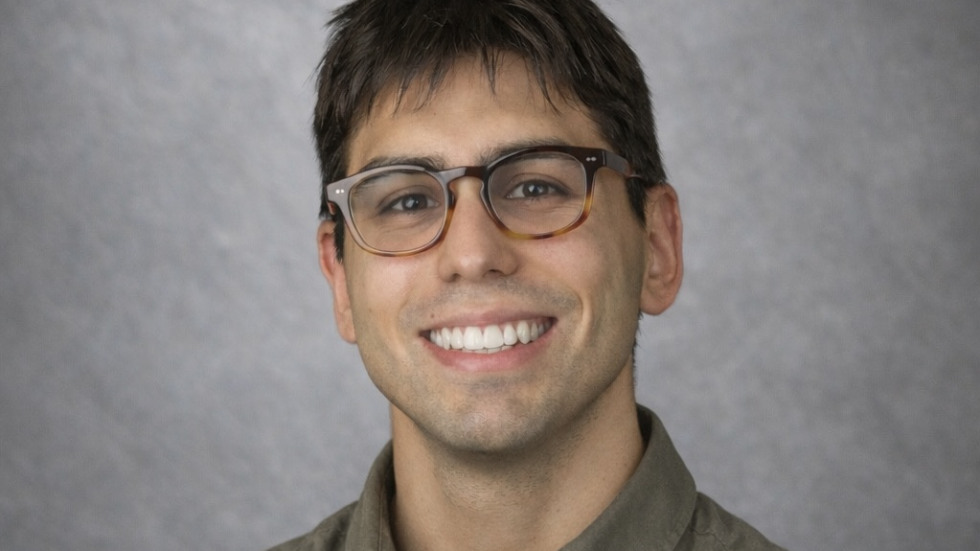
Meet Daniel Martinez Ortiz, a student in Brown’s master of public health (MPH) program who completed a geospatial health practicum at MD Anderson Cancer Center in Houston, Texas.
During his practicum, Ortiz examined access to computed tomography (CT) imaging across Houston, using geospatial analysis to identify disparities in access to advanced diagnostic care.
Using ArcGIS, he mapped imaging facilities alongside census-tract data on poverty and insurance coverage. His findings revealed that access to advanced diagnostic imaging was concentrated in wealthier, better-insured neighborhoods, highlighting the role of socioeconomic factors in healthcare access.
The experience gave Ortiz an opportunity to connect his clinical background as a CT technologist with public health research while strengthening his technical and communication skills. It also deepened his commitment to advancing health equity and exploring how health policy can improve access to diagnostic care.
Q: What did your experiential learning experience look like?
A: “During my MPH practicum at MD Anderson, I led a geospatial analysis mapping CT imaging access across Houston, plotting hospital scanners, independent centers and freestanding ERs against census-tract poverty and insurance data,” Ortiz said.
A typical day involved gathering facility locations, layering them with American Community Survey (ACS) indicators in ArcGIS and identifying gaps between where imaging facilities were located and where the need for diagnostic services was greatest.
The project resulted in an interactive StoryMap showing that CT access was concentrated in wealthier, better-insured neighborhoods, leaving the city's most vulnerable communities with longer distances to advanced diagnostic care.
Q: What was the biggest challenge you encountered, and how did you overcome it?
A: “The biggest challenge was learning to trust that my perspective belonged in this work. As an immigrant and a CT technologist, not a traditional researcher, I sometimes questioned whether I had the 'right' background to be doing public health analysis,” he said.
What helped him move forward was recognizing that his lived experience and clinical background were valuable assets to the research.
“I had seen firsthand how patients from different neighborhoods experienced care differently. That perspective gave my work meaning that data alone never could,” Ortiz shared.
Q: What skills did you develop or strengthen through this experience?
A: “I learned to use ArcGIS to map health infrastructure and overlay it with socioeconomic data, a skill I never imagined I'd have as a CT tech,” he said.
Beyond developing technical skills, Martinez Ortiz strengthened his ability to communicate complex research findings through data visualization.
“Growing up as an immigrant, I learned early that you have to communicate across different worlds. This project let me apply that same instinct, taking complex findings and making them accessible to community members, clinic directors and policymakers alike,” he said.
Q: How did this experience shape or influence your academic or career goals?
A: “This experience made something very clear to me: where you grow up should not determine how quickly you get a diagnosis,” Ortiz shared.
His practicum connected his personal experiences navigating healthcare systems with his academic interests in public health and health equity. It also gave him the technical tools to identify disparities in access to diagnostic care and advocate for change.
“I grew up understanding what it means to navigate systems that were not built with you in mind, and this practicum gave me the tools to document that reality and advocate for change, I want to be one of the voices ensuring that equity is not an afterthought in public health planning, but the foundation it is built on,” Ortiz shared.
The experience also inspired him to pursue health policy leadership and contribute to decisions about diagnostic infrastructure.
Q: How did you find and secure this opportunity?
A: Ortiz secured his practicum through direct networking, including cold outreach and informational interviews.
His experience highlights the value of building professional connections and reaching out to organizations working in areas that align with your academic and career interests.
Q: What has been the most valuable part of your experience so far?
A: For Ortiz, the most valuable parts of the experience were gaining hands-on technical skills that he could not develop in the classroom, building professional confidence and learning to navigate a real-world research environment.
The practicum also allowed him to see how the theories and concepts from his MPH coursework could be applied to real public health challenges.
By connecting his clinical experience with geospatial research, Ortiz gained a new perspective on how data can help identify healthcare disparities and inform more equitable planning.